Bridging Design, Construction, and Technology: Unhas and UNIMAS Architecture Departments Craft Solutions for a Sustainable Built Environment
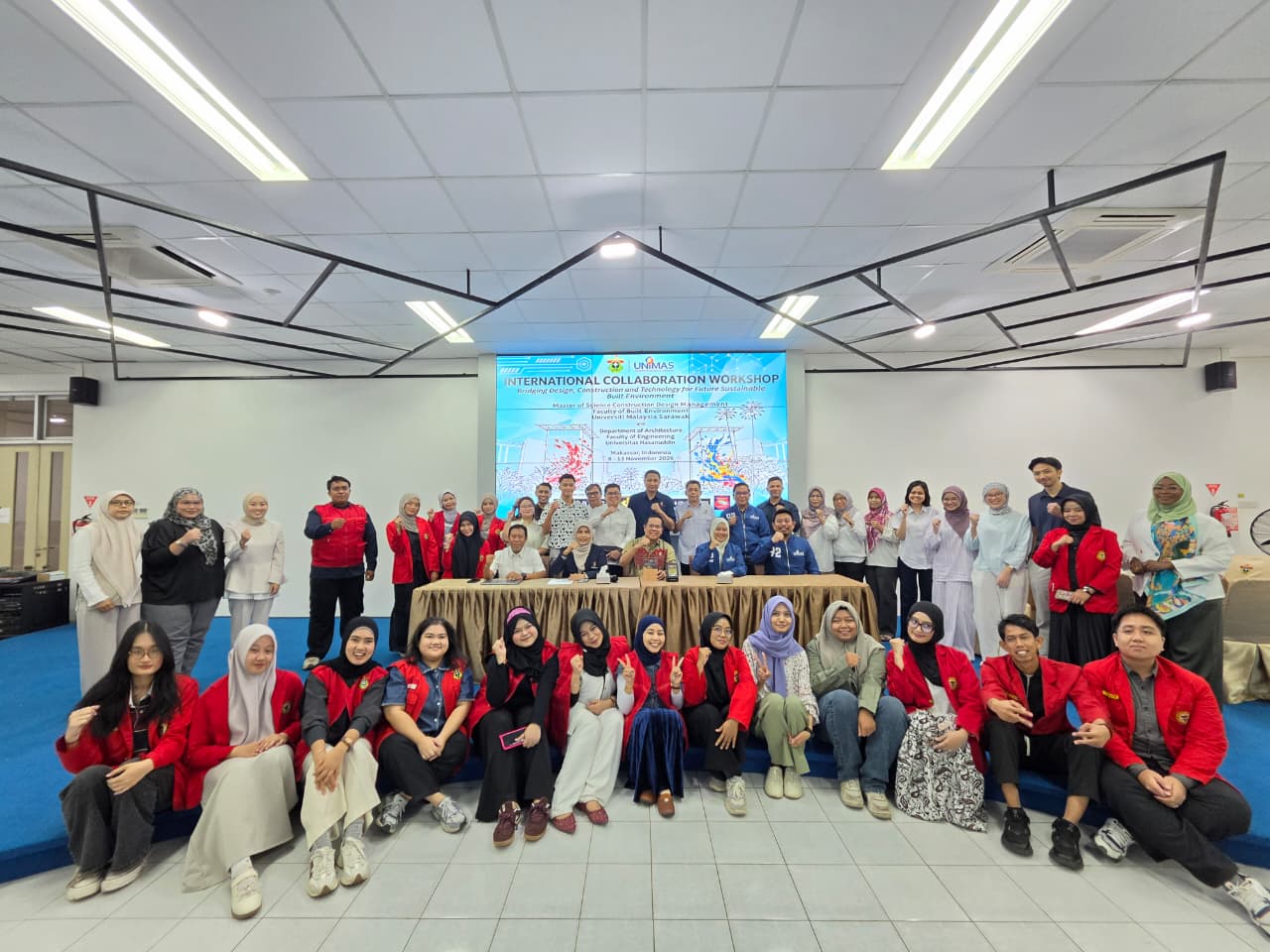
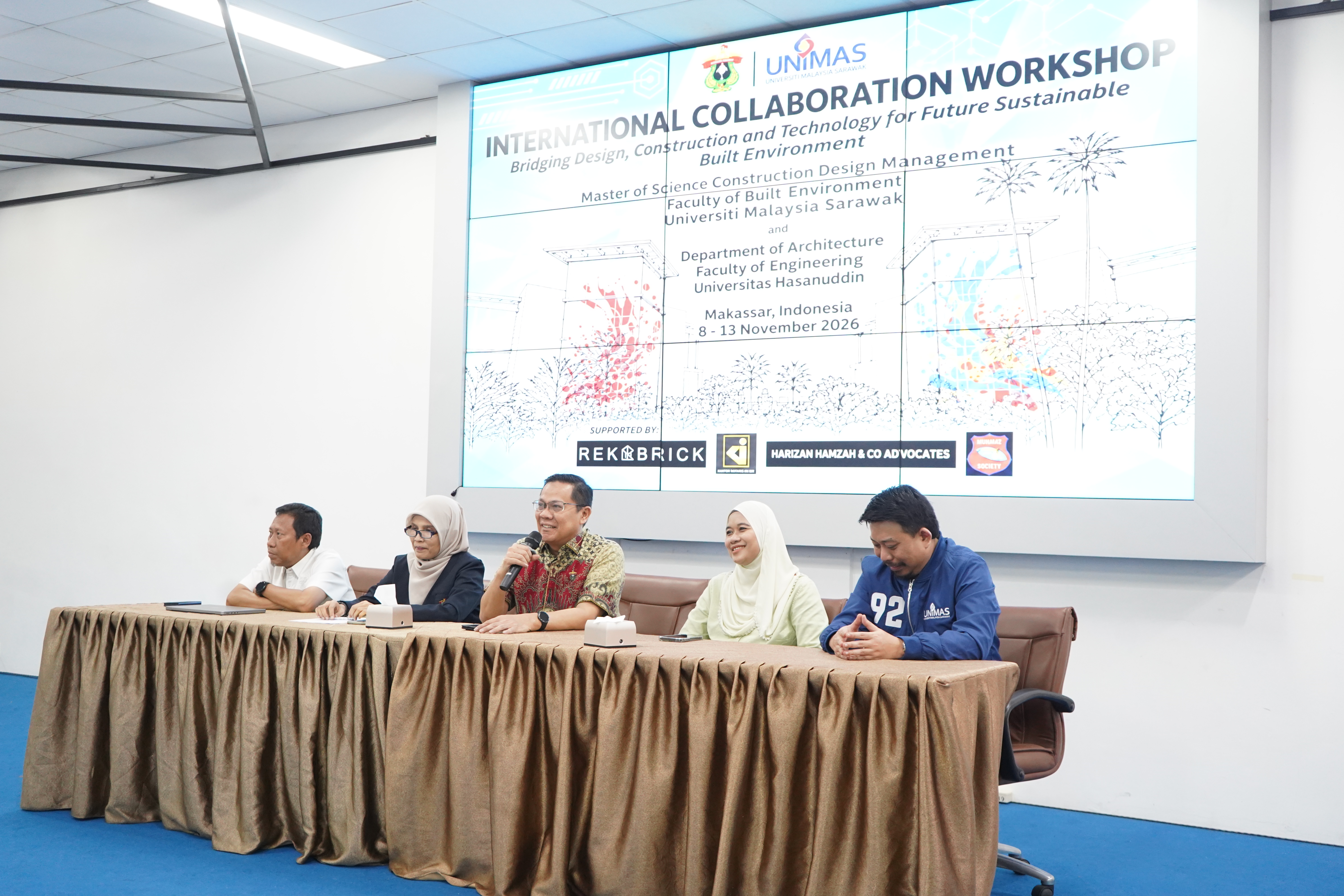
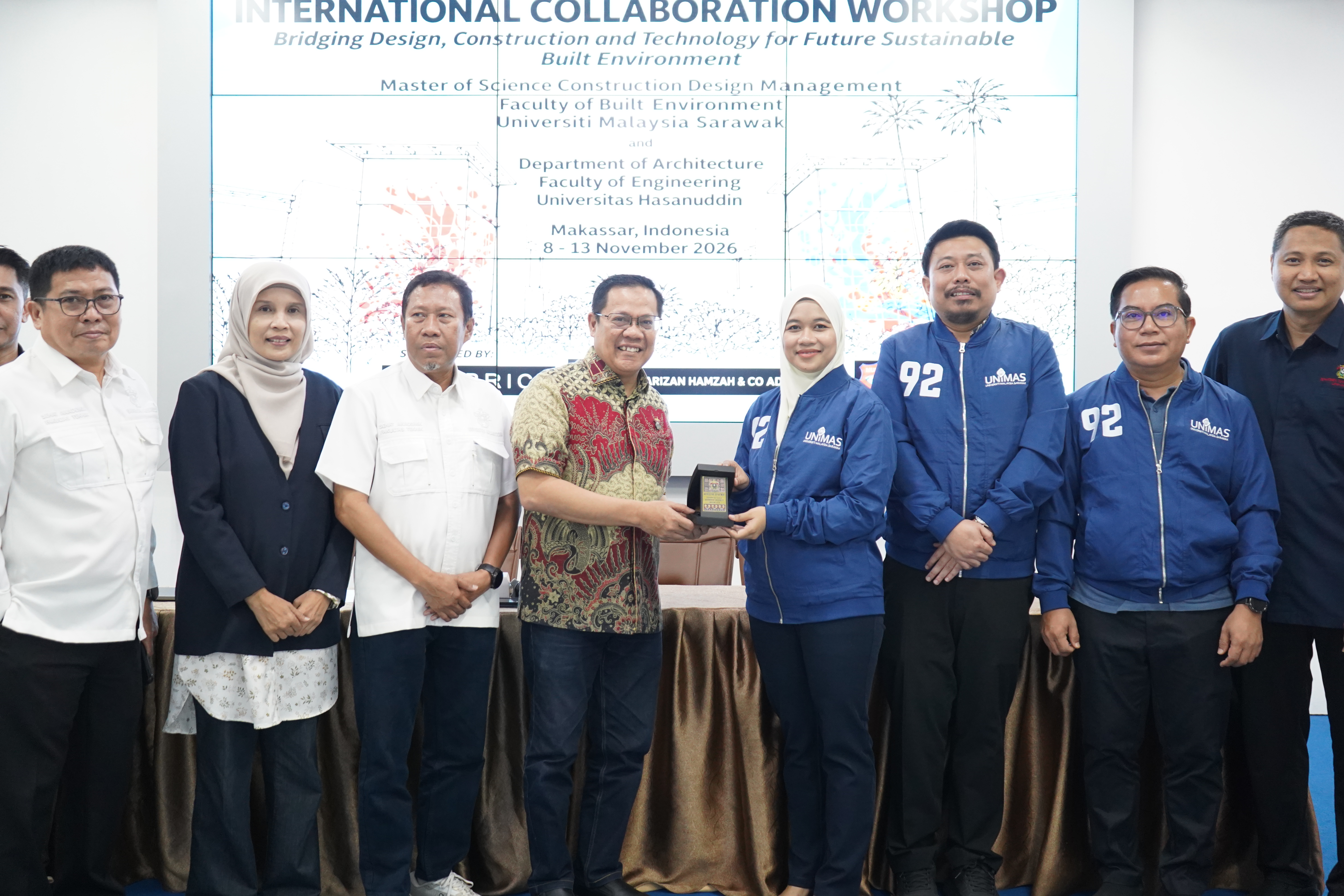
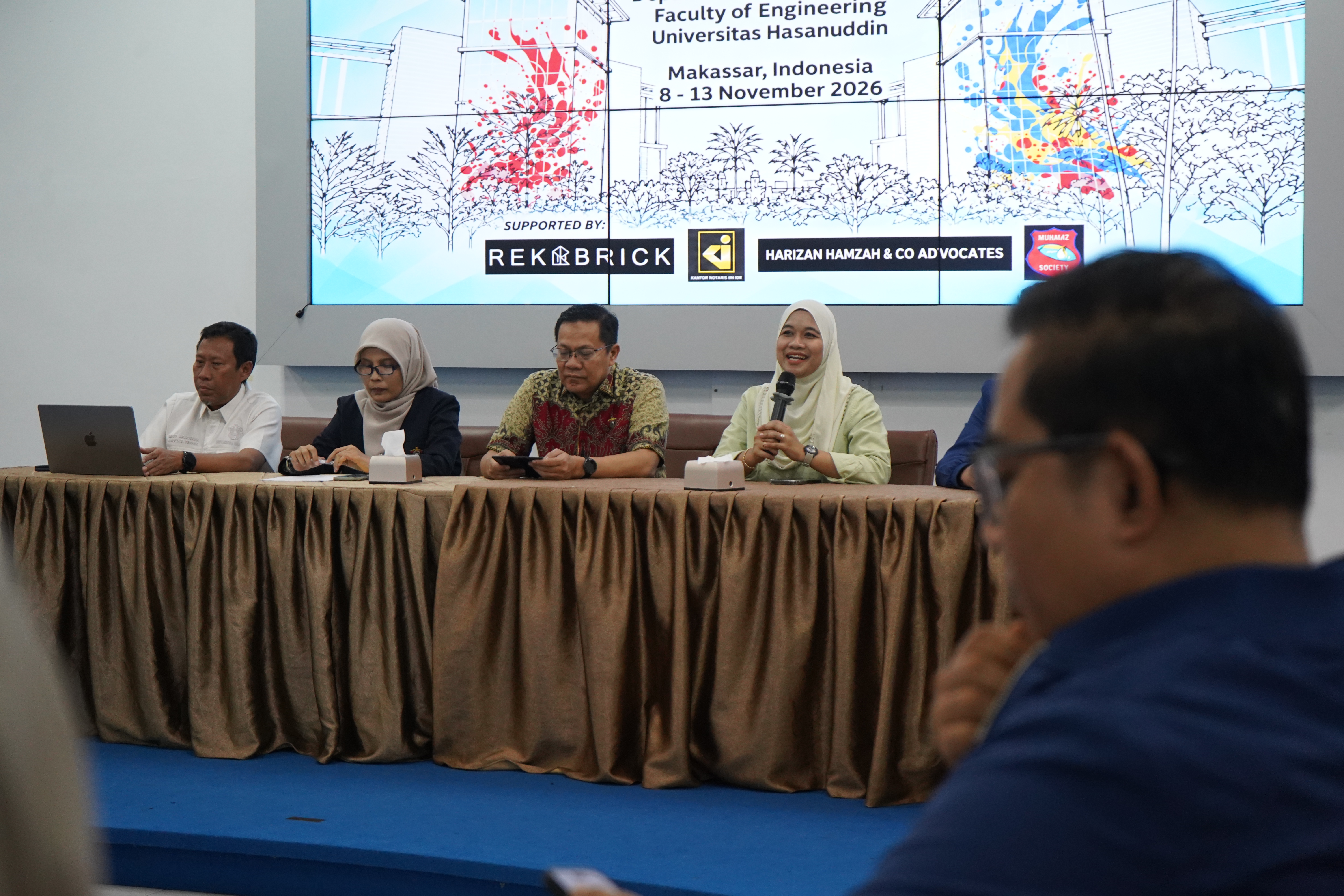
GOWA – The Department of Architecture, Faculty of Engineering, Hasanuddin University (Unhas), together with the Master of Science in Construction Design Management program of the Faculty of Built Environment, Universiti Malaysia Sarawak (UNIMAS), held the International Collaboration Workshop at the Unhas Gowa Campus from 9 to 12 November 2026. Under the theme “Bridging Design, Construction and Technology for Future Sustainable Built Environment,” the event brought together 32 postgraduate students from two countries to address the challenges of the future built environment across disciplines.
From an Academic Visit to Real Collaboration
The collaboration began with an academic visit to Kuching, Sarawak, in September 2025, following the APTARI National Working Meeting in Pontianak. The visit to UNIMAS’s Faculty of Built Environment on 18 September 2025 paved the way for further discussions, which continued through online meetings on 10 March and 1 July 2026.
Relations between the two institutions grew closer when Mr. Abdul Wafi bin Razali, Deputy Dean of UNIMAS’s Faculty of Built Environment, visited Unhas on 31 August 2026 and delivered a guest lecture to students of the Department of Architecture. This series of exchanges has now evolved into a concrete international collaboration program.
Four Weeks, Four Knowledge Clusters
The program was designed to run for four weeks. In the first three weeks, each cluster worked at its own university on an identical set of activities, allowing students in both countries to develop comparable understanding and preliminary data. In the fourth week, all participants met and worked together for four days at the Gowa Campus.
This format is noteworthy because it combines independent work in two local contexts with an intensive collaborative session, so that ideas are exchanged only after each side has built its own body of study. The workshop covered four complementary thematic clusters.
- Passive Design Approaches for Sustainable Building Performance. This cluster examines design strategies that make use of natural conditions, such as building orientation, daylighting, and ventilation, to improve building performance without relying excessively on artificial energy. This approach is relevant to the tropical climates of Indonesia and Malaysia.
- Indoor Environmental Quality Challenges in Buildings. This cluster focuses on indoor environmental quality, which directly affects occupants’ comfort, health, and productivity.
- Innovation in Sustainable Building Materials for Construction. This cluster explores innovation in sustainable building materials as a key to reducing the environmental impact of the construction sector.
- Site Planning, Development and Management in the Construction Industry. This cluster addresses site planning, development, and management as the foundation of efficient and responsible projects.
Together, these four themes show that sustainability is not only a matter of building form. It also involves materials, spatial quality, site management, and the technology that connects them all, in line with the idea of “bridging design, construction, and technology” that gives the event its theme.
Students and Lecturers from Two Countries
The workshop was attended by 8 students from UNIMAS’s Master of Science in Construction Design Management and 24 students from Unhas’s Master of Architecture program. They were guided by four cluster supervisors from UNIMAS and four cluster supervisors from Unhas. Six students from the undergraduate, professional architecture (PPAr), master’s, and doctoral levels of the Unhas Department of Architecture also took part as student observers to broaden their insight into internationally scaled academic activities.
The program also included guest lectures by Dr. Mohd Afzan Mohamed and Dr. Noorhayatie Yusof of UNIMAS on Wednesday, 11 November 2026, offering additional perspectives to students and lecturers.
Appreciation from the Faculty Leadership
The Dean of the Faculty of Engineering, Unhas, Prof. Dr. Eng. Ir. Muhammad Isran Ramli, S.T., M.T., IPM., AER, welcomed the workshop and expressed his appreciation to everyone involved. “We are very pleased with, and grateful for, the holding of this event. We hope this workshop can serve as a platform for students to collaborate, exchange ideas, and broaden their horizons across institutions and across countries,” he said.
According to the Dean, international collaboration of this kind gives students room to think and work in a global context while strengthening the quality of education at the Faculty of Engineering.
In Line with Unhas’s Internationalization Mission
The event aims to strengthen academic ties between the two universities, enrich students’ international experience, and encourage collaboration in education and research in architecture and the sustainable built environment. It is also aligned with Mission 1 of Unhas, which is to deliver innovative, high-quality education through stronger international academic partnerships. One of its key performance indicators is the number of inbound students from overseas universities to Unhas.
For the Faculty of Engineering, the presence of UNIMAS students and lecturers at the Gowa Campus affirms its position as a trusted academic partner at the regional level.
Toward Sustained Cooperation
The Chair of the Organizing Committee, Dr. Eng. Asniawaty, S.T., M.T., expressed her hope that the event will mark the beginning of a long journey. “We hope this event will be more than a four-day joint activity and will become the start of sustained academic cooperation between Hasanuddin University and Universiti Malaysia Sarawak,” she said.
Looking ahead, the collaboration is planned to grow through joint research, joint scientific publications, student exchanges, and collaborative academic supervision. The committee also hopes that a similar event will continue in 2027, with UNIMAS as the host.
With a theme close to the needs of the tropical region and participants from two countries, the workshop is expected to produce ideas that benefit the development of buildings and areas that are more resource-efficient, comfortable for their occupants, and responsible toward the environment.