FTUH’s Two Distinguished Professors Help Bring Indonesian Airports into the Low-Emission Era
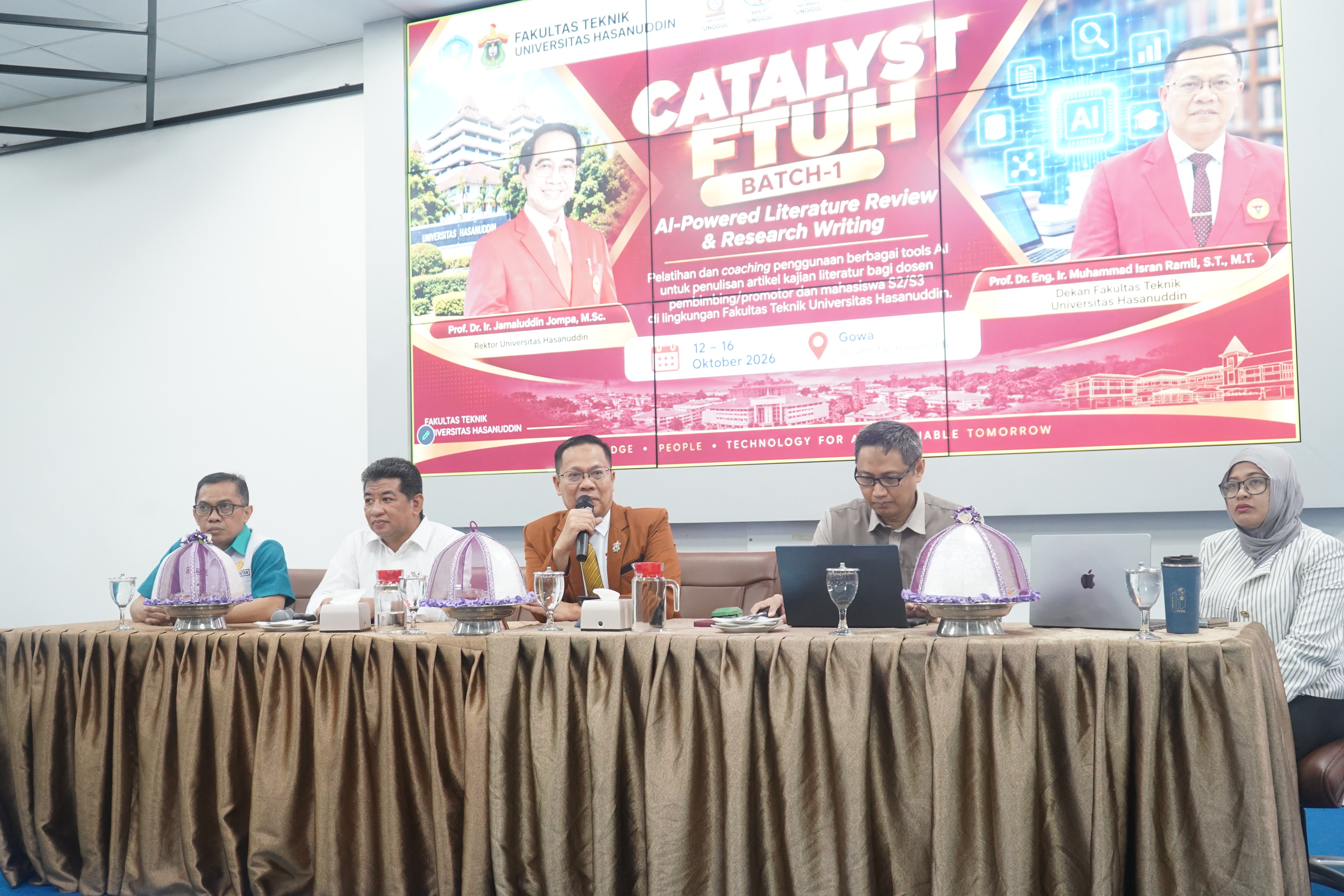
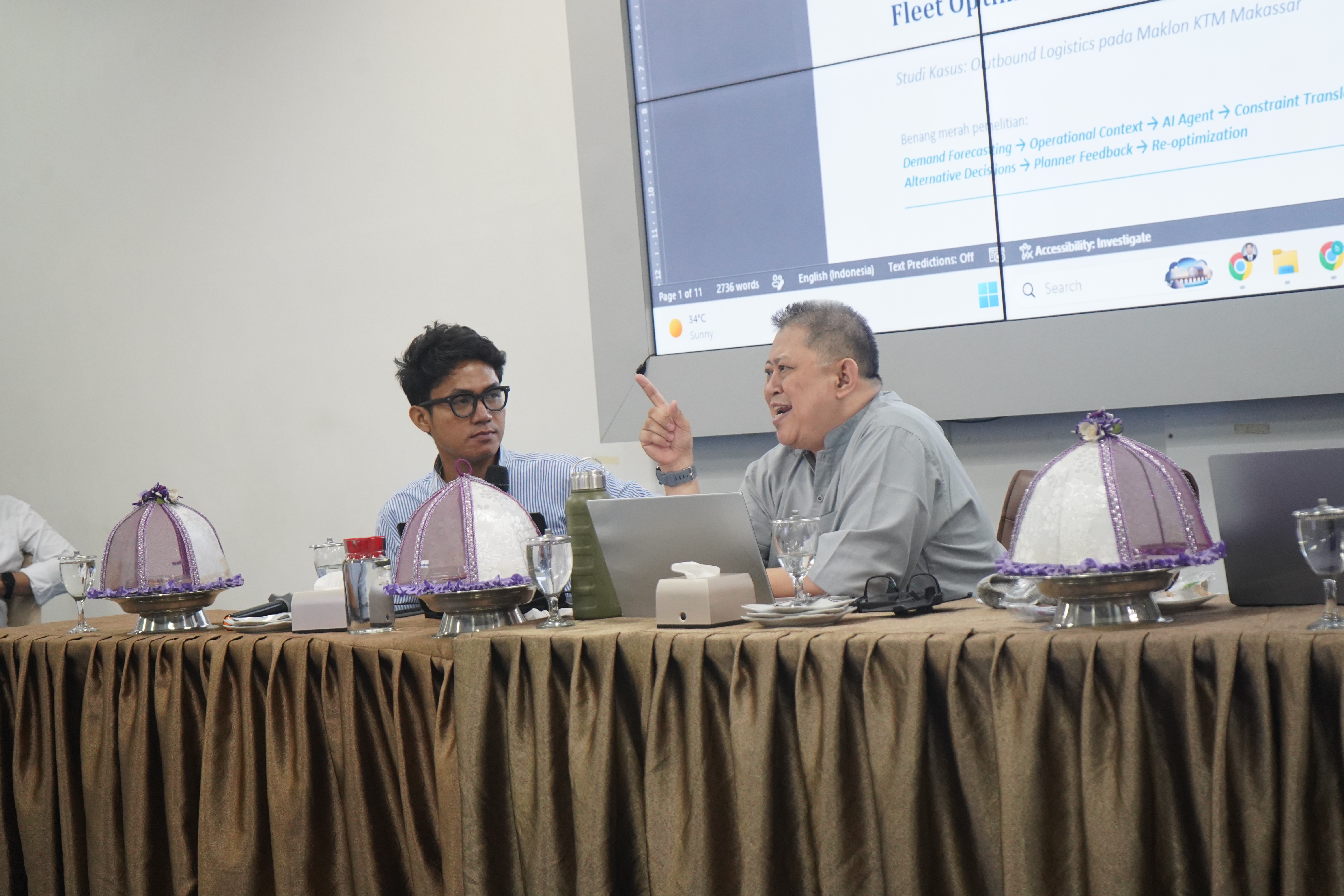
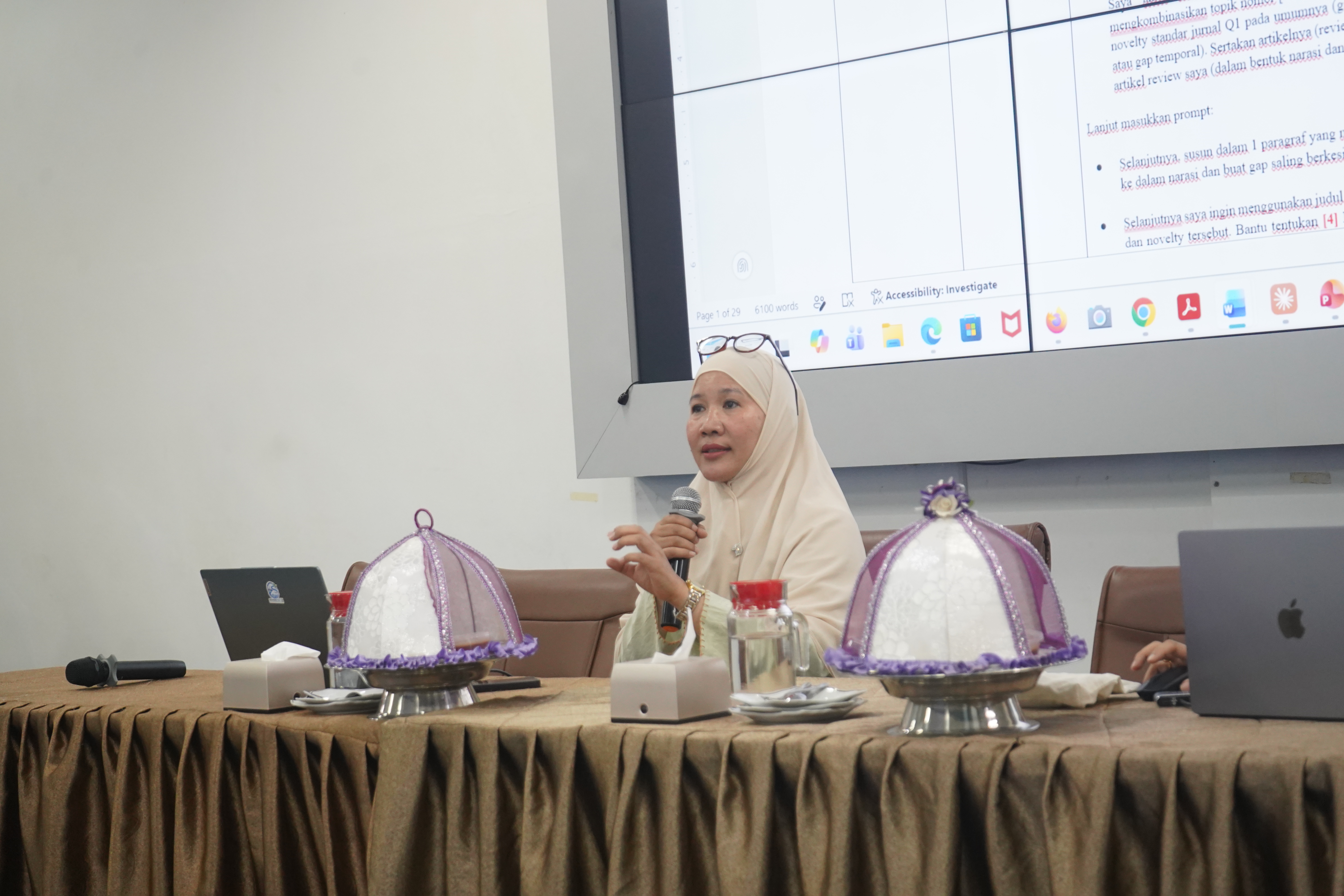
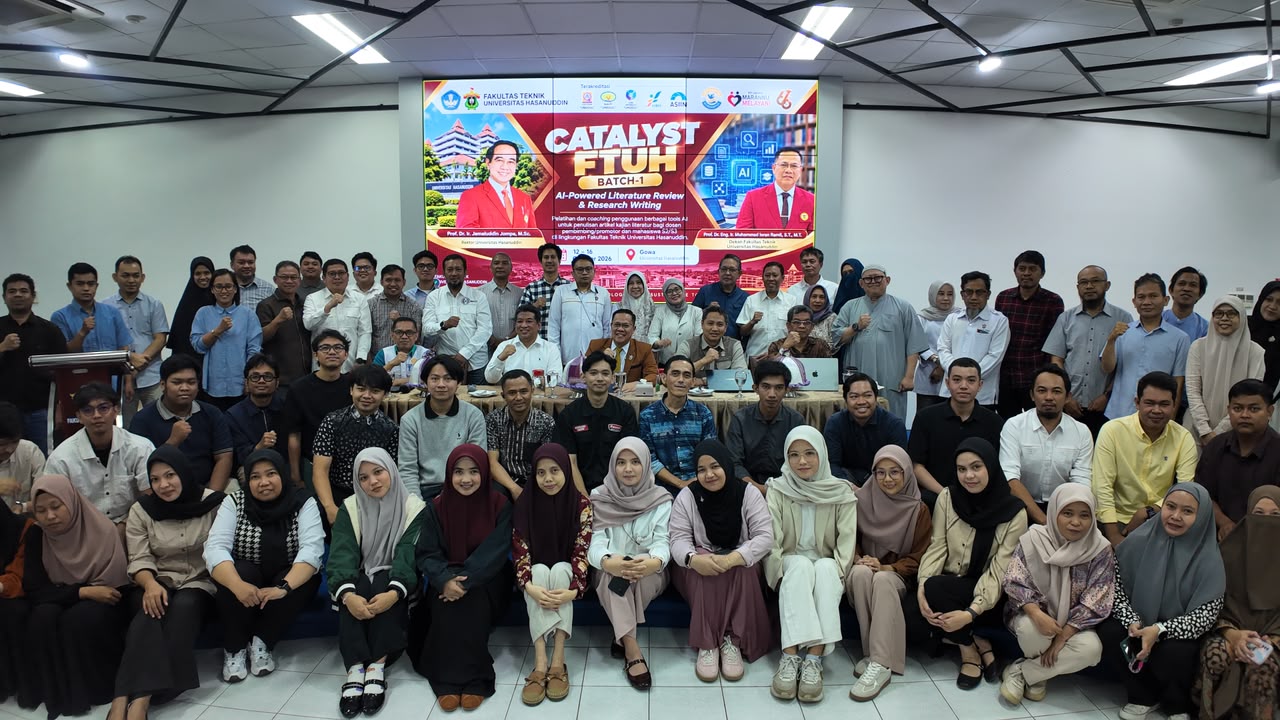
Gowa, 12 October 2026 – The Faculty of Engineering at Hasanuddin University (FTUH) is conducting a CATALYST training programme entitled “Network Analysis & Narrative Review for International Journals with the Assistance of Generative AI” from 12 to 16 October 2026 at the Exhibition Hall on the ground floor of the Faculty of Engineering’s Center of Technology (CoT) Building in Gowa. The programme is designed to strengthen the capacity of lecturers and postgraduate students to produce systematic, evidence-based scientific articles that contribute to the advancement of science and technology.
The training integrates scientific literature search strategies, bibliometric analysis, publication network mapping, critical synthesis of research findings, and the use of generative artificial intelligence (Generative AI) in article preparation. Through this approach, participants are encouraged to do more than compile references: they are guided to identify research gaps, establish the novelty of their work, and develop robust scholarly arguments for publication in international journals.
Developing Data-Driven Scientific Publications with Original Research Contributions
The CATALYST training is structured as an intensive five-day programme, taking participants from the formulation of research ideas through to the refinement of manuscripts intended for submission to target journals.
On the first day, participants begin by defining their research topics, research questions, research gaps, and the novelty of their articles. This stage provides an essential foundation for scientific writing, as it establishes how a study is positioned in relation to knowledge previously published in the field.
Participants then learn literature-search strategies using keywords, Boolean operators, and reputable databases. The articles retrieved are screened and curated according to inclusion and exclusion criteria. Publication metadata are cleaned and standardised to create a relevant literature corpus for analysis.
An important element of this stage is the use of generative artificial intelligence to support literature screening and curation. This technology is intended to make information processing more efficient; however, the careful academic judgement required to select appropriate sources and assess the relevance of evidence remains essential.
Participants are also introduced to bibliometric analysis using RStudio and Bibliometrix to identify publication trends, research productivity, and the evolution of scholarly themes. The results help researchers understand the knowledge landscape of their chosen fields and identify opportunities for further research.
Using Network Analysis to Map the Development of Knowledge
On the second day, the training focuses on network analysis using VOSviewer. Participants learn to map relationships among publications, authors, and research themes through co-authorship, co-occurrence, co-citation, and bibliographic coupling analyses.
These network visualisations provide a broader perspective on the development of a field of study. Researchers can trace patterns of collaboration among authors, connections between keywords, and intellectual relationships among publications cited in their research.
The process goes beyond visualising data. Participants are guided to interpret bibliometric findings as supporting evidence for a narrative review. They then compare previous research findings to identify patterns, similarities, differences, contradictions, and trade-offs among various scholarly approaches.
This process provides a foundation for developing comparison tables, visualisations, and theme-based discussions. Accordingly, the resulting articles are expected not merely to summarise previous studies, but also to present a critical synthesis that highlights relationships among findings, scholarly contributions, and directions for future research.
This approach is important because the quality of a review article is not determined solely by the number of references it contains. Its academic value also depends on the author’s ability to evaluate evidence, explain the limitations of existing knowledge, and develop arguments that lead to new insights.
From Draft Preparation to Submission Readiness
On the third day, participants continue developing their manuscripts independently, with guidance from facilitators. The work focuses on refining the Introduction and Methods sections, preparing the Results section, and developing the Discussion and critical synthesis. By this stage, participants are expected to have completed approximately 70–80% of their article drafts.
The fourth day is devoted to integrating all manuscript sections into a complete and coherent paper. Participants strengthen the consistency of their arguments, clarify the research gap and novelty, refine tables and network visualisations, and check that citations correspond to the references. During the manuscript clinic, they also have the opportunity to consult facilitators on the substance, analysis, and structure of their papers. The target is for manuscripts to reach 90–95% completion and be ready for quality control.
On the fifth day, the focus shifts to quality control and article finalisation. Participants check the consistency of data, tables, figures, citations, references, and manuscript structure. They then refine the academic language and conduct peer reviews using an article-quality checklist.
The final stage includes selecting target journals, adapting manuscripts to the journals’ author guidelines, preparing cover letters, and checking that all submission documents are complete. The programme concludes with an evaluation of the training and the preparation of article-submission schedules.
The intended outcome is a complete narrative review manuscript ready to proceed towards submission, accompanied by bibliometric and network analysis results, finalised tables and figures, references, a selected target journal, a cover letter, and a submission checklist.
Academic Collaboration to Strengthen the Faculty’s Reputation
According to the participant list in the programme documentation, the training involves master’s and doctoral students from various disciplines within the Faculty of Engineering at Hasanuddin University, including Civil Engineering, Mechanical Engineering, Earth and Environmental Technology, Informatics, Geological Engineering, Naval Architecture, Architecture, Urban and Regional Planning, Marine Engineering, Industrial Engineering, and Mining Engineering.
The participation of students from diverse disciplines creates opportunities to exchange perspectives and develop a wider range of research approaches. Interdisciplinary collaboration is increasingly important in addressing complex technological and development challenges, which often require contributions from several fields of expertise.
The CATALYST training also forms part of broader efforts to foster an academic culture that values methodological rigour, responsible use of technology, and publication quality as essential elements in the advancement of knowledge. The use of Generative AI and scientific analysis tools is expected to help researchers work more systematically without compromising academic integrity, source verification, or authors’ responsibility for the content of their articles.
Through this programme, the Faculty of Engineering at Hasanuddin University aims to further strengthen its academic capacity to produce high-quality scientific publications, expand research collaboration networks, and increase its scholarly contributions at both national and international levels.
More broadly, improvements in publication quality are expected not only to enhance the institution’s reputation, but also to expand the use of research findings in technological development and in addressing societal challenges. By bringing together literature analysis, critical synthesis, and digital technologies, the CATALYST training represents a strategic step towards more focused, innovative, and impactful research.