Three Countries, One Stage: UNHAS Faculty of Engineering Brought Together Experts from Australia, Norway, and BRIN to Map Out Sustainable Industry
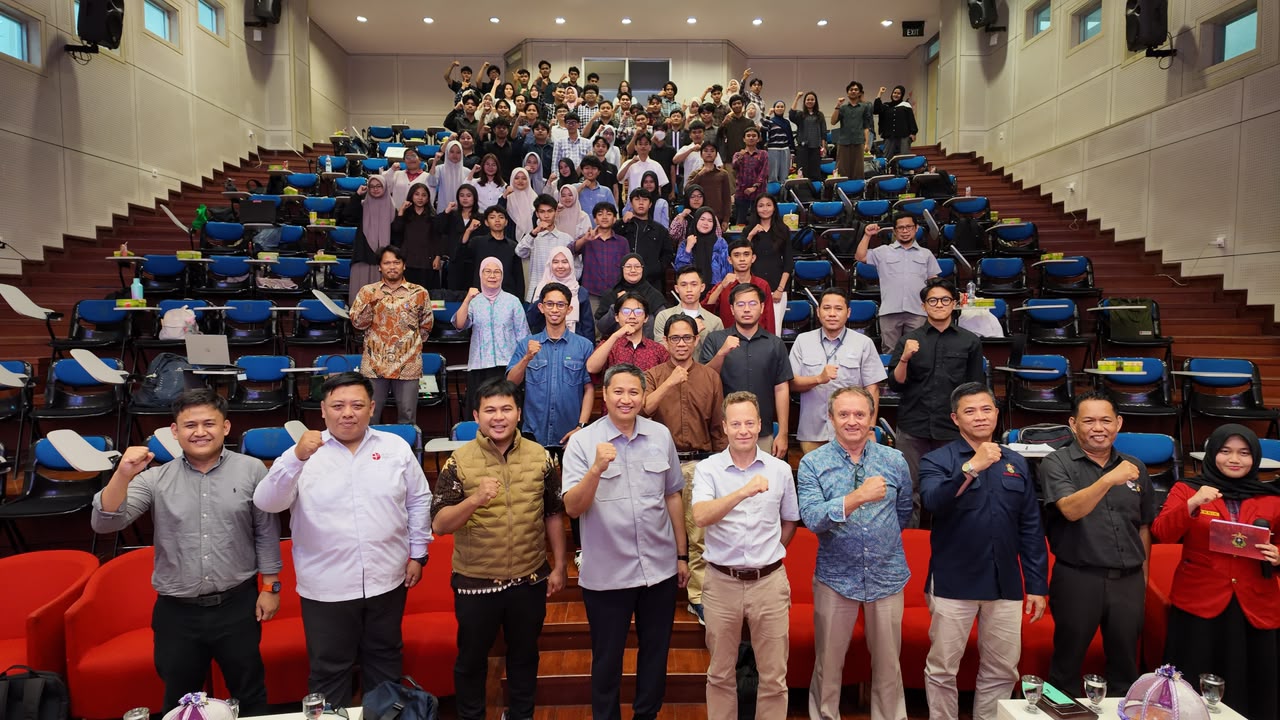
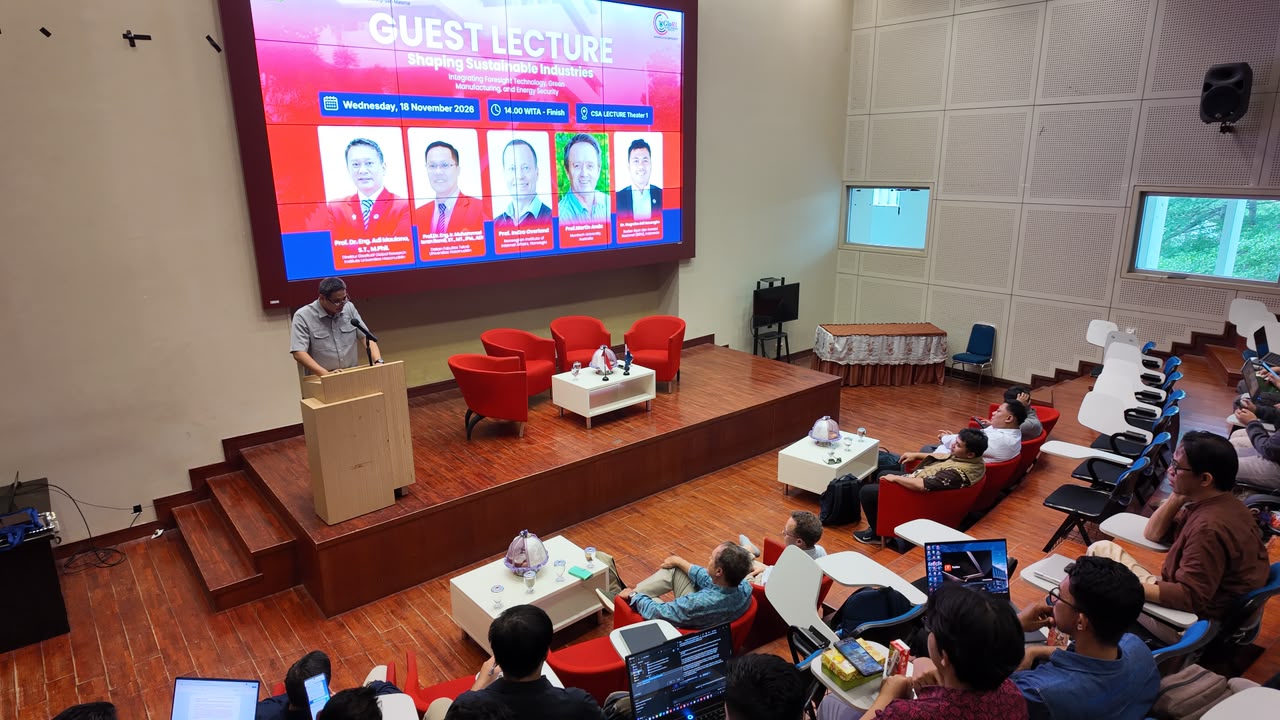
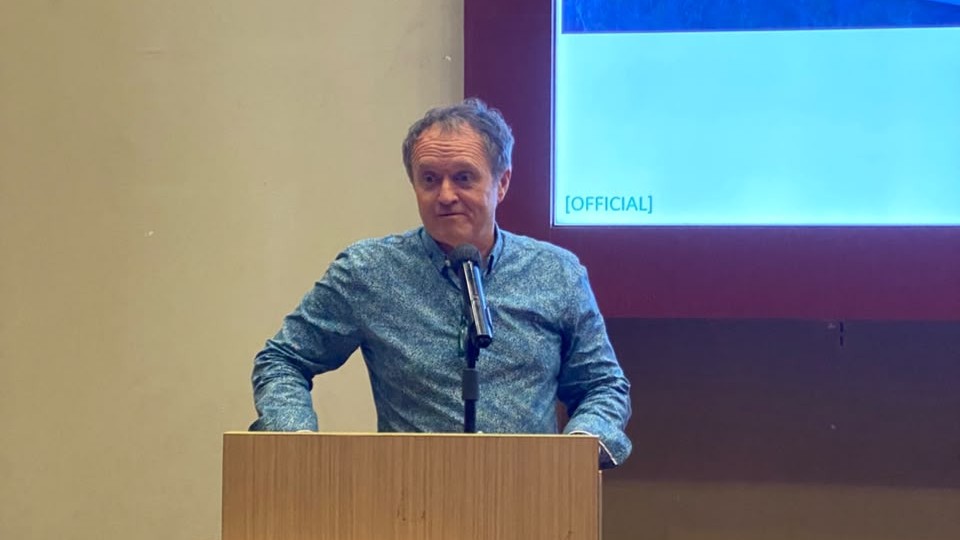
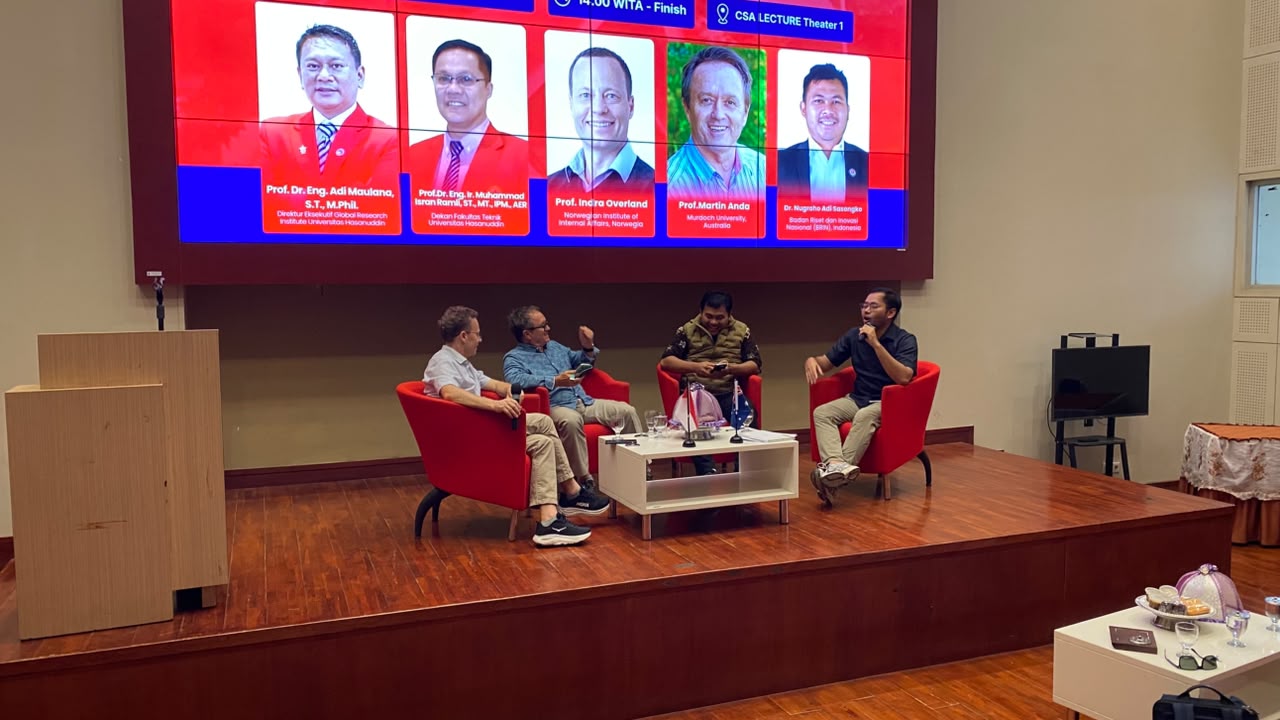
The Undergraduate Program in Metallurgical and Materials Engineering, Faculty of Engineering, Hasanuddin University (FT Unhas), held the 2026 Guest Lecture, themed “Shaping Sustainable Industries: Integrating Foresight Technology, Green Manufacturing, and Energy Security,” on Wednesday, 18 November 2026, at Lecture Theater 02, CSA Building, Faculty of Engineering, Unhas Gowa Campus. The event featured three speakers from three countries: Associate Professor Martin Anda of Murdoch University (Australia), Dr. Nugroho Adi Sasongko of the National Research and Innovation Agency (BRIN), and Prof. Indra Overland of the Norwegian Institute of International Affairs (NUPI), Norway. The speakers discussed the direction of sustainable industrialization, from the use of mining waste for low-carbon concrete to the global dynamics of critical materials.
The event was attended by students, lecturers, and researchers of the Faculty of Engineering, Unhas. The forum demonstrated FT Unhas’s commitment to strengthening international academic networks and connecting campus research with industrial challenges, particularly in South Sulawesi, which was growing into a national hub for nickel processing.
The event was opened with remarks from the Dean of the Faculty of Engineering, Unhas, Prof. Dr. Eng. Ir. Muhammad Isran Ramli, S.T., M.T., IPM., AER, who was represented by the Vice Dean for Partnerships, Research, Innovation, and Alumni, Prof. Muhammad Bachtiar Nappu, S.T., M.T., M.Phil., Ph.D. In his remarks, he expressed his gratitude and appreciation to the speakers for taking the time to share their knowledge and experience with the FT Unhas academic community.
Prof. Bachtiar explained that the theme of sustainable industry was highly relevant to Indonesia’s position as one of the countries with the largest nickel reserves in the world. He stated that mineral downstreaming had to go hand in hand with environmental responsibility, energy efficiency, and technological mastery. He also emphasized that the partnerships with Murdoch University, BRIN, and NUPI were part of the faculty’s strategy to expand research collaboration, open opportunities for student and lecturer mobility, and enhance FT Unhas’s international reputation. He hoped that students would use the forum to broaden their horizons and build networks with world-class experts.
First Presentation: Mine and Refinery Waste for Low-Carbon Concrete
The first session was delivered by Associate Professor Martin Anda of the Environmental Engineering and Circular Economy Research Group, Murdoch University, on the topic “Mine & Refinery Waste Characterisation for Low-Carbon Concrete.” He began his presentation by introducing several collaborations already established with Unhas, including the UNHAS RISE project, a New Colombo Plan student program of Australia’s Department of Foreign Affairs and Trade (DFAT) that developed solar-powered seawater desalination, and a study of nickel slag at the Bantaeng Industrial Estate.
Martin Anda explained that cement production accounted for about 8 percent of global CO₂ emissions. About 60 percent of those emissions came from the chemical reaction in clinker production, not from fuel. Therefore, replacing fuel alone was not enough to reduce emissions, and the use of clinker also had to be reduced. Many residues from mining and mineral processing, such as nickel slag, contained reactive aluminosilicates that could partially replace cement. In this way, residues that were once a storage burden could become valuable products, a clear example of the circular economy.
He described three roles that such residues could play: as supplementary cementitious materials (SCMs) that partially replaced Portland cement, as geopolymer precursors, or as aggregates and fillers that replaced sand and stone. These roles were determined through a staged laboratory testing framework. It started with the requirements of the application, followed by material characterization using XRD and TGA/DSC, then reactivity tests such as the R3 test (ASTM C1897), and finally leaching tests using the US EPA LEAF method to ensure that the material was safe for the environment. He stated that safety was a mandatory “gate” that had to be passed, not just a footnote. He also introduced a draft of a new learning unit on waste characterization for the circular economy, which could be adapted into engineering education curricula.
Second Presentation: Technology Foresight and Sustainable Industrialization
The second session featured Ir. Nugroho Adi Sasongko, S.T., M.Sc., MBA, Ph.D., IPU, Head of the Research Center for Sustainable Industrial and Manufacturing Systems (PRSIMB) at BRIN. He also served as Adjunct Professor at Northeastern University (China), Honorary Senior Research Fellow at Murdoch University, and a lecturer in the Energy Security Study Program at the Indonesia Defense University. In his public lecture, titled “Technology Foresight and Sustainable Industrialisation,” he invited participants to look ahead to the future of technology and choose the right path for industrialization. He did so through the narrative “South Sulawesi from Pinisi to Batteries” and a joint Unhas–BRIN research agenda toward 2045.
Dr. Nugroho explained that technology foresight was a systematic approach to mapping the long-term direction of technological development, such as chips, quantum computing, biotechnology, and new materials. The results of this mapping helped the government, industry, and universities set research and investment priorities. He highlighted the external pressures facing national industries, one of which was the full implementation of the European Union’s Carbon Border Adjustment Mechanism (CBAM) starting in 2026. This required Indonesian processing industries to reduce the carbon footprint of their products to remain competitive in the global market.
According to him, South Sulawesi had strong assets for transformation, ranging from its maritime tradition and local technological wisdom, reflected in the pinisi, to its mineral resource potential for the electric vehicle battery supply chain. This transformation required applied research, green manufacturing innovation, and close collaboration between universities and research institutions. He considered Unhas and BRIN to be strategically positioned to drive a research agenda that supported the Golden Indonesia 2045 Vision.
Third Presentation: Critical Materials, A Realistic Take
The final session was delivered by Prof. Indra Overland, Research Professor at the Norwegian Institute of International Affairs (NUPI) and Research Associate at the Oxford Institute for Energy Studies, on the topic “Critical Materials: A Realistic Take.” He presented projections of a surge in demand for critical materials through 2050, based on the International Energy Agency’s Net Zero Emissions scenario. According to him, 2050 was only 24 years away, while opening a single new mine took 10 to 20 years, and the mine then had to operate for decades for the investment to pay off.
Prof. Overland criticized the view that equated critical materials with “the new oil.” Unlike oil, which is burned and consumed, critical materials accumulate in products, can be recycled, and have different supply chain characteristics. Concerns about the resource curse also could not be generalized, because cases such as the Democratic Republic of the Congo did not represent all countries, and many lessons and better resource governance models were now available.
He emphasized that geopolitics and reserves were often overestimated, while industrial policy, trade, and manufacturing capacity received too little attention. China’s dominance in critical materials processing, for example, came from subsidies, economies of scale, vertical integration, and a complete industrial ecosystem, not merely from the size of its reserves. He also warned of real challenges such as technological substitution, extremely rapid technological change, and the failure of several battery and electric vehicle companies due to a lack of resilience. This message was highly relevant for Indonesia: nickel downstreaming would be strategically valuable if accompanied by stronger manufacturing capacity and technological innovation.
The Guest Lecture reaffirmed the role of the Faculty of Engineering, Unhas, as a meeting place for ideas among academics, national research institutions, and international partners. The three presentations complemented one another: the use of industrial waste as low-carbon construction material, the mapping of technology directions for sustainable industrialization, and a realistic understanding of the markets and geopolitics of critical materials.
Through this event, the Undergraduate Program in Metallurgical and Materials Engineering, FT Unhas, hoped to open opportunities for joint research, international publications, student and lecturer exchanges, and curriculum development that met the needs of green industry. This collaboration was expected to produce real solutions for communities and industries in South Sulawesi, particularly in nickel slag waste management, reducing emissions in the construction sector, and strengthening national energy security. FT Unhas also remained committed to producing outstanding graduates with a global outlook who were ready to contribute to sustainable development toward Golden Indonesia 2045.